
Growing into relationships
What are the key lessons from my 2026 Word of the Year so far?
For the past few years I have chosen a Word of the Year rather than attempting resolutions. 2026 is my year of “Relationships”. This decision originated with three main influences:
A growing interest in Systems Thinking - an approach that recognises just how interconnected everything is, and that boundaries and reductionist thinking are human constructs which can be helpful but do not reflect reality.
An awareness that I can be too introverted and isolationist. Some alone time serves to recharge my batteries and allow reflection; too much feeds into my panic disorder, overthinking and tendency to catastrophise.
My discovery of the term inter-being from Thich Nhat Hanh, a Vietnamese monk whose clear writings on Buddhism led me to embrace that path.
When I chose the WOTY “Relationships”, it wasn’t just to hone in on personal ones, although increasing awareness and improving these is an essential aspect of it. The choice was also to expand my relationships with the entire web of life. Those of us raised in W.E.I.R.D. countries1 have had severe connection to our place in nature, and it’s no longer second-nature to us to appreciate the importance of the many more-than-human entities without whom we couldn’t be here. In choosing “Relationships”, my intention was to re-connect to these other beings and to grow into those relationships.
Passing the halfway point of 2026, I want to contemplate how well my focus on relationships has actually been going so far.
What’s been going well
Expanding pathways to like-minded people
The most obvious place for me to start is the development of new relationships with other like-minded and like-hearted individuals, above all around permaculture. There’s no doubt that my online Permaculture Design Course through Applewood Permaculture Centre has been pivotal in growing my sense of belonging to a greater group with a greater cause. The tutors were inspiring and encouraging, and there were so many lovely fellow coursemates with whom to share ideas, experiences and challenges.
The OPDC spiralled out into other relationship-expanding actions for me. On the advice of one of the tutors, Barbara of Bogota Šuma, I joined up with Looby Macnamara’s Cultural Emergence collective. I’ve only made two of the online design cafés so far, but I’m enthusiastic for more. As with many permaculture groups, the sharing of experiences and practices is inspirational and motivating.
Another group with which I’ve engaged is more fluid, varying in attendance size and depth of discussion due to this: Wilf Richard’s Permaculture Principles sessions. Taking place on Monday evenings, it’s a limited time group which goes through a different chapter of his book The Power of Permaculture Principles each week, and will obviously come to its natural conclusion when all chapters have been explored. It sparks a lot of thought and has birthed more than one article here on my Substack, and continues to forge new connections with other people and other works. I’d never have thought joining an exploration of a book with the author could prove so fruitful, and hope more writers take up such an opportunity in future.
Leaning into Engaged Buddhism
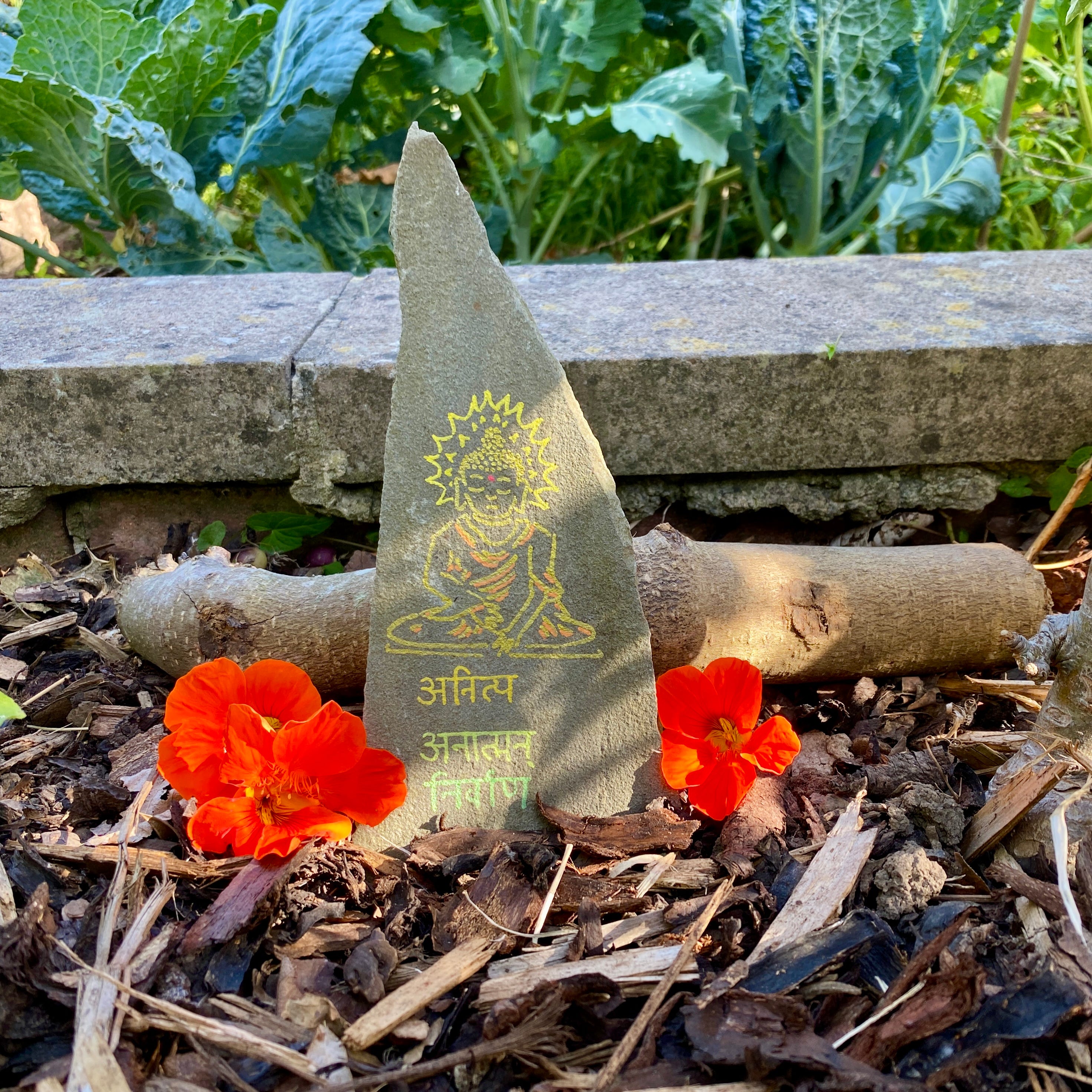
Having enjoyed so many of Thich Nhat Hanh’s books on Engaged Buddhism, I was overjoyed to discover there is a sangha2 in his Plum Village tradition which meets locally to me. I attended for the first time on 1st July for an evening session of guided, walking and silent meditation, rounded off by a short reading.
Leaning into Buddhism through connection with others was a novel experience, having spent many years of my life meditating in solitude, on and off. I say on and off because meditation, like yoga, has never been a practice I’ve adhered to consistently, although I’ve found recent practice with a Zen emphasis both easier to stick with and more transformative mentally and spiritually.
I look forward to leaning into this communal relationship with Buddhism much more regularly going forwards, and the new people I’ll meet and deeper sense of inter-being that I’ll experience through it.
Deepening existing friendships
Besides building relationships with new groups, I’ve made sure to deepen my existing relationships with friends. This has been supported not only by my WOTY, but also by something my hypnotherapist - seen in spring 2026 to help with my panic disorder - said one day: ‘You’re becoming someone who says “yes” to life.’
While recognising it’s important to say “no” to safeguard rest periods and avoid burnout, I’m trying more actively to agree to social events organised by my friends and colleagues, as well as an upcoming summer street party neighbours are arranging. It’s reconnected me with schoolfriends and has improved my relationships with workmates.
It also brings me a greater sense of perspective. When withdrawing, it’s all too easy for our challenges to inflate dramatically out of proportion. Being around good friends allows sharing of difficulties, exploration of solutions and re-balancing of just how bad things might really be. And when things are particularly getting me down? I know I have reliable friends with whom to talk things through.
Now I’m working part-time, there is that age-old quandary of having more time but less cash to socialise with…
Relationship with myself
Of course, an advantage of having gone part-time is liberating more time to build my relationship with myself. I don’t have to leave the house before 6:30am five days a week anymore, just two, so I get precious early hours to sit in meditation before moving into anything else. I’m less tired after work so more able to engage with the other relationships I am building, as well as with journalling.
The time I get to meditate and journal, or to go on country walks and sit reading in the garden, foster communication with my inner thoughts and feelings. It allows me time to tie these into the wider web of life. I find I have much more nuanced insights into my life, my patterns and where I do and could fit into our world now that I have dedicated more time to reflective work.
What’s been going less well…
Negative self-talk
I don’t want to paint this all as a rosy picture, however. While I’ve freed more time to relate with myself, I do still fall into the trap - for now - of over-emphasising negative occurrences, delving into worst case scenarios and using negative self-talk. I am my own worst enemy these days and at the lowest points, my mind will say things to me that I would never say to another.
Re-building self-belief and courage is manifesting as a major aspect for me to work on. The question is what do I turn to when the negative self-talk begins to outweigh any positives?
Local community engagement
I did demonstrate a remarkable spurt of confidence a few weeks ago in relation to community engagement. There is a local Facebook page for sustainability, and while on the whole it seems more about swapping unwanted items than living regeneratively/sustainably, a member did share that they were scheduling a get-together to plan showing the National Emergency Briefing video. I commented to confirm attendance, turned up despite pouring rain - and never found the group.
I asked the staff at the venue after waiting for a few minutes, and they kindly seated me in the function room, not knowing anything about it themselves. As it turns out, the group was in the venue right beneath my nose, and because I didn’t recognise them (being a newbie) and them having no “advertising”, I failed to notice. I left, none the wiser, until the organiser replied to my message that evening.
That was as close as I've come to some form of purposeful relationship in my local community. I confess to the above incident having dampened my enthusiasm a little. I’m also still unsure at the moment how to create some sort of community engagement with permaculture, regenerative practices and building localised resilience. I hear of many inspirational projects like Incredible Edible and dream of streets lined with fruit bushes and parks filled with herbs, but have yet to work out how to proceed in setting up a group to implement and maintain the like.
Stumbling animism
And while my efforts to relate with local community a bit more has been faltering, so too have my attempts to connect more closely with the more-than-human entities all around me. It was important to me when choosing this WOTY to see the entire web of life with fresh perspective.
My Buddhist meditation regularly reminds me how interconnected we all are. I wouldn't be here without the air in my lungs, which has been exhaled by trees and countless other organisms before me. I wouldn’t be here without the water filling 70% of my body, which has circled the globe since time immemorial and seen more places and faces than we could ever imagine. I wouldn’t be here without the rays of the sun and the minerals of the earth that flow through roots and leaves and into my core through meals.
Yet I’m not easily translating such wisdom into practice. Do I truly see the plants when I prune them for neatness or harvest them for food? Do I truly appreciate the soil as I mulch it and plant into it? Do I even give thanks to the water when using it to irrigate the garden, and to the rains and clouds and oceans that make such irrigation possible? I don’t often. It’s not coming easily to me, and that is thanks to our upbringing, severed from indigeneity and rootedness in the earth. It’s also worsened when I feel busy or rushed or in a lower mood, when I forget my gratitude and hurry to get onto the next step.
Restrictions in language
A further factor, as much as I love languages, is the restriction placed on us anglophones by the English language itself. It isn’t a tongue which relates easily to the more-than-human anymore, especially since losing its grammatical genders between the 11th and 14th centuries, when we fell even more into a division between animate and inanimate.
The general tendency now is for humans to be animate, animals to be animate but unintelligent and, dare I say it, dispensable, and anything else from plants to rocks to fire is merely an inanimate “thing”.
The danger with “things” is they’re overlooked or abused. The idea of them having a will or needs is disregarded. They’re only tools or starting blocks, never ends with value within themselves which must be approached with mindfulness, humility and curiosity.
I want to return to mindful, humble and curious relationship with all beings. It’s a practice I want to develop, beginning this year, but carrying on for the rest of my days. How can the language I employ support this?
Learning Welsh
When I recognised the mismatch between the modern English language and the more-than-human, I decided to explore Welsh (Cymraeg). This was also linked to my contemplations around a notion of “lost indigeneity”, with Welsh seeming like the closest I could get to an indigenous language in the British Isles.
My learning started well - I used the Duolingo app, and I find it really motivates the initial steps of language learning. However, my personal approach to learning a language is very different to Duolingo’s method of teaching. the latter throws new words at you regularly, mixing them amongst new phrases so they can be used in daily life. Conversely, I love grammar. My linguistic brain functions by getting to grips with the rules, then learning where to put words accurately. The speed at which Duolingo whips through modules with no grammar support wears down my commitment. So has it been with Welsh. After a 40-day streak, I’ve hit a dry patch of several weeks where I haven’t returned to the app.
Not the sense of connection I hoped learning this Celtic tongue would bring…
Moving into the second half of the year
There are some clear steps I intend to take to maintain focus on “Relationships” as my WOTY before 2026 is through:
Continue increasing my practice of mindfulness in every moment. This will improve my ability to truly see the elements with which I’m interacting, whoever they are, recognise their roles and needs, and observe the threads that bind us all together. I may weave language play into this, speaking to them silently as “thou” rather than “it”, and taking the time to thank them for what they bring us.
Continue my Buddhist practice and learning, hopefully reinforced by attendance at the local sangha.
Take the next steps on my permaculture journey too. I plan to sign up for an online Permaculture Teaching Training course for the latter end of this year, and to begin my permie diploma through the Permaculture Association UK also.
Looking back to my 1st January 2026 article - I need to get connected and creative with my garden crops. It was an original intention to build a strong relationship between garden and kitchen (and back again), but I haven’t closed the loop fully yet. I find it easy to sow seeds and plant out, yet I’m less reliable when it comes to harvesting and use still.
The deeper purpose of our actions
In the end, actionable steps and negative points aside, the crux of this WOTY is acknowledgement and appreciation of the inter-being of all life. The actions are manifestations of underlying truths: that every part of our beautiful planet is interdependent and interconnected.
I am increasingly full of awe and wonder at this, and at the deeper purpose our actions take on when performed from a place of relationship, a place that recognises and shows profound gratitude for our inter-being.
It’s life-changing and life-affirming to take the time to reflect on how each thing we do ripples along the web of life itself. These actions almost step outside of time, as we can’t always know when the fruits of our labours will manifest, or in what way, or to whom. That’s actually quite an empowering, grounding realisation. We don’t have to be the brightest or the loudest to make a real difference in our world. Those who feed their loved ones, their more-than-human neighbours and the soil beneath our feet are as meaningful as the policy-makers and educators.
The depth of our interconnected actions is also very sobering, bringing home how vital it is that we all take care in how we treat the life around us.
Over to you
I’ve identified some practices to help extend and improve my relationships from this year onwards, but I wonder:
What other practices do you find most effective for building relationships, be they with people or the more-than-human?
I look forward to reading your responses and any other feedback in the Comments below.
Other articles you might like


Western - Educated - Industrialised - Rich - Democratic
A community of followers of the Buddha.