
Defining permaculture
Reflections on how to define permaculture for others in a time of shortened attention spans
Like it or not, we’re living in the era of “clickbait”, of Instagram Reels and Youtube Shorts, and of snappy “elevator pitches”. The Ancients wouldn’t have known what to make of it; the room left for expansive and evocative narrations is shrinking. The sagas have long been too epic for many.
This raises challenges when we mention a concept new to those around you, when they ask “what is that?”, and we feel hemmed in by modernity’s unspoken demands for brevity. The intensity of the task is heightened when the subject in question is more voluminous.
I find myself in this situation whenever I mention pursuing an online Permaculture Design Certificate at the moment.
“What is permaculture?”, comes the reply - either verbally or through a slightly muddled expression.
And in truth, despite a few years of reading about permaculture, incorporating aspects of it in my gardening, and now logging into fortnightly classes, I found it difficult to respond. It’s especially hard to answer without focusing purely on gardening and land design, mainly because this is where it originated. This, in spite of many permaculture practitioners achieving important breakthroughs in social, cultural and educational spheres.
As we were shown in the first of our OPDC classes, there are actually many definitions of permaculture, and while some resonated with me more than others, none felt like a description I’d be comfortable reeling off. When I’ve returned to those multiple definitions, I’ve felt myself becoming more confused on what to say to others, rather than more clear.
How I’m defining permaculture
Typically for me, I took it upon myself to contemplate how I would define permaculture. This process took the following form:
Reflect on permaculture principles and ethics;
Utilise a handful of those principles and ethics as “keywords”;
Produce a single, shorter statement through considered placement of the keywords.
I wrote and re-wrote several versions of the statement before settling on a final definition - and whilst I say “final”, I’m remaining conscious that this might evolve over time as other realisations emerge. These might be my own realisations through practice, or they might be points revealed to me by others.
But for now, here is my definition of permaculture:
‘Permaculture is a holistic design approach in which we observe and emulate natural living systems in order to obtain yields as efficiently, ethically and mindfully as possible.’
The keywords (highlighted in bold) were initially more numerous. Permaculture has a hefty arsenal of principles, all highly valuable alongside its three/four ethics. Am I the only person who feels enticed by plenty, to incorporate as many elements as possible?
However, I discovered the more I cut back, the more accessible the definition became - and this is the point of it.
To give the “uninitiated” the key to unlock the door.

Keywords 1 & 2: Holistic design
The hinges on which that door pivots: that permaculture is first and foremost a design philosophy, with its ethics, its principles and its common practices.
Permaculture guides its adherent to design holistically, in particular. It recognises that the sum of the whole is greater than its parts.
It reminds us regularly that no element stands alone or is more important than any other. In actuality, permaculture recognises that it’s the relationships between elements that holds the most power. It values a whole systems perspective before any designing or action is taken, and integration of all parts during implementation.
Keyword 3: Observe
Within permaculture, observation of what exists is crucial. We were advised on our OPDC to apply the Pareto principle to any design work. Normally this states that 80% of results come from 20% of the work, hence it’s also called the “80:20 rule”.
We were told to focus 80% of our effort on observation and understanding, and just a potent 20% on the implementation.
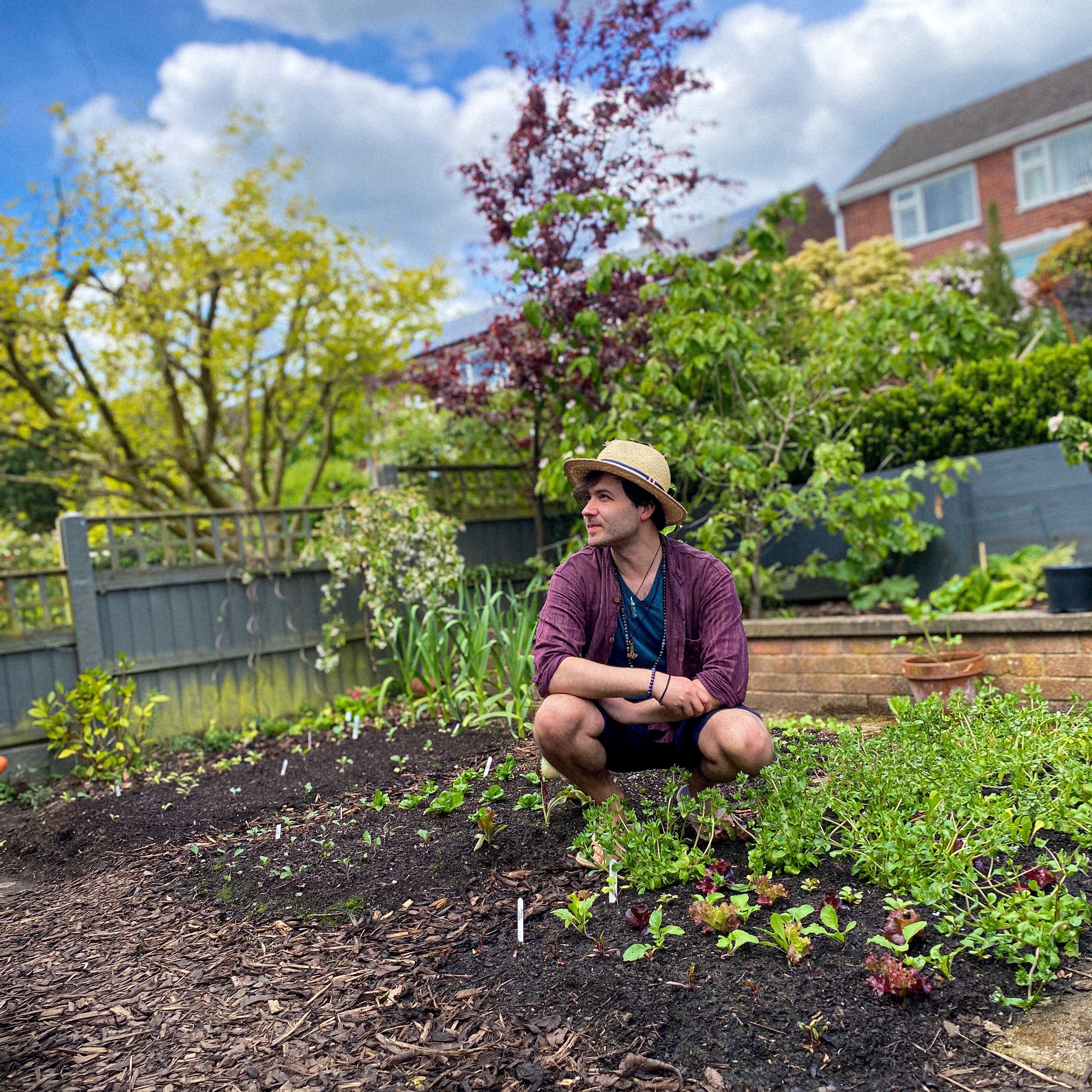
It’s actually amazing what we discover when we step aside and simply watch over time. For instance, as I move our veg patch here from annual beds to one polyculture bed, I’ve had many self-seeded corn salad plants germinate and over-winter, and other vegetables I’ve let go to flower may follow suit. The need to buy bags of compost and seed packets, sow into seed trays indoors and then transplant outside in warmer conditions is reduced by noticing and allowing such resilient natural systems.
Such processes, perfectly evolved over millennia, would be swept aside by the over-ardent designer who plans and enacts change quickly. Hasty action can also lead to unforeseen consequences that might have come to mind with more forethought and consideration of relationships.
Keywords 4 & 5: Emulate living systems
Not only does permaculture seek to observe more regularly and closely, but to copy and expand living systems, like the self-seeding annuals I’ve described above.
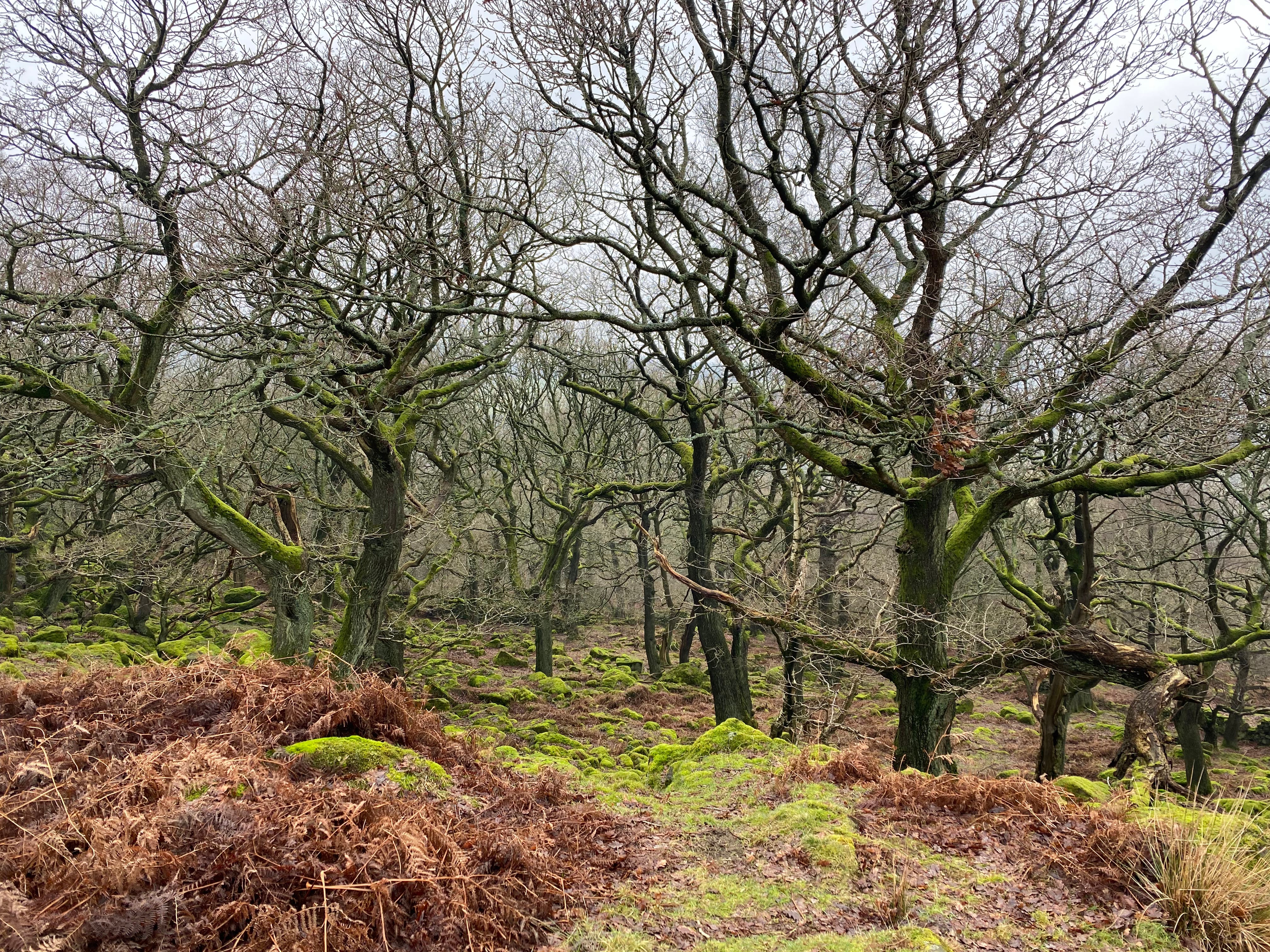
Permaculture is a life-affirming, life-enhancing approach. There is no point reinventing the wheel: our Earth has developed so many wonderful, productive and regenerative processes. We can mimic such systems1, integrating organic, living elements.
Keyword 6: Yields
Permaculture is primarily about designing for yields. At first the emphasis was on crops, and in many cases this tends to continue: food, fuel and fibre.
However it’s important to broaden our grasp of “yields” moving forwards.
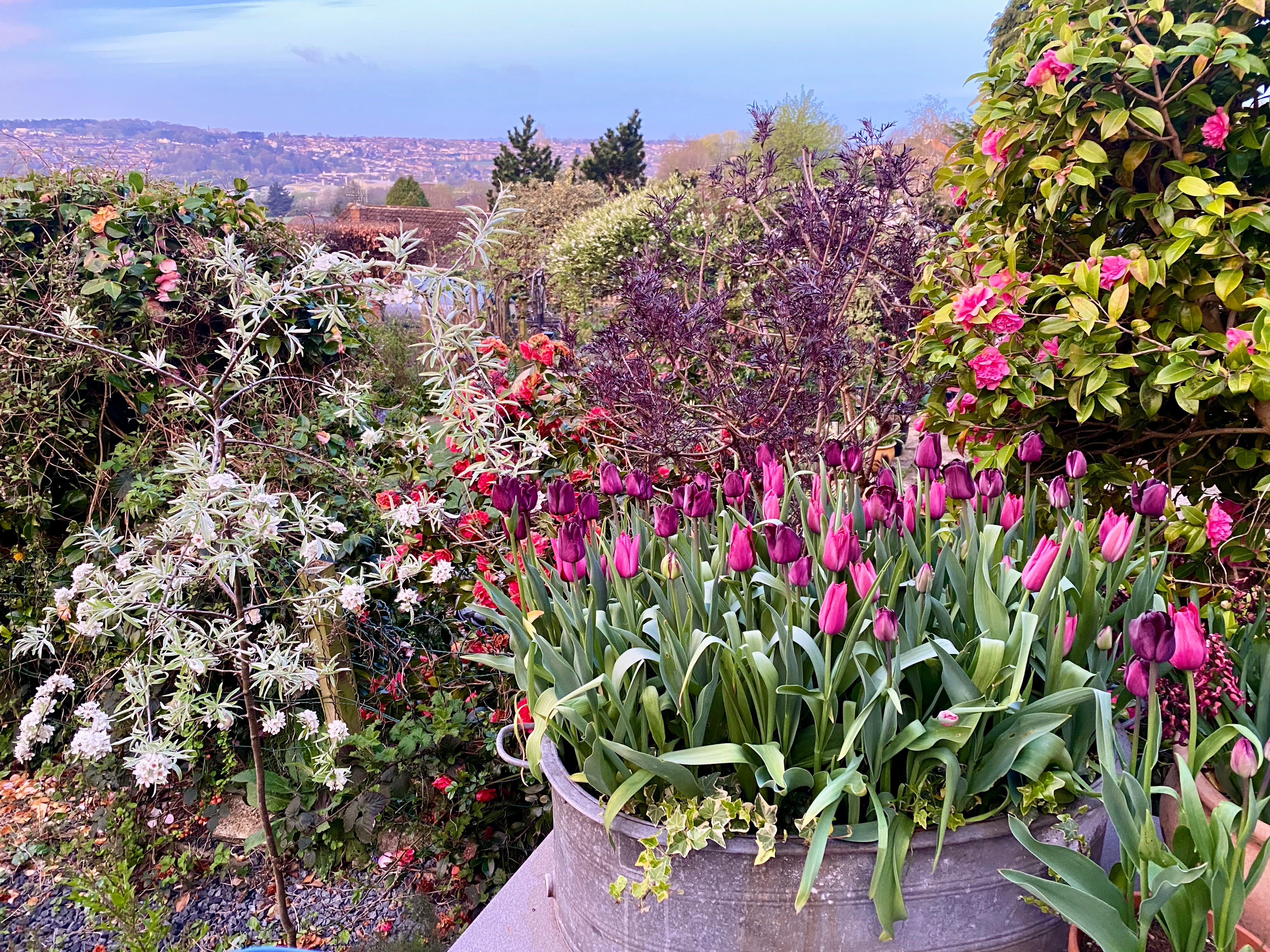
On the one hand, a yield can be abstract as much as concrete. It can be beauty, which nourishes and soothes the soul; plant-based medicine or space for exercise, to heal and strengthen the body and mind; places to gather and share, building and bolstering relationships and community.
Alongside the significance of non-concrete yields is inclusion of yields for others as well as ourselves - for neighbours, for the locality, for the more-than-human life around us. What elements can we bring into designs to nourish and shelter others too? How much can we share from our crops to allow others to thrive alongside us?
Keyword 7: Efficiently
Permaculture aims to design efficient systems to support life and obtain all our yields. It calls us to create designs that:
are implemented only when necessary;
begin small and slow, causing the least disturbance to what already exists and allowing plentiful reflection and tweaking as we go along;
place newer elements carefully, through relative location - such as keeping food crops closer to the kitchen, or compost and tools close to the veg patch, minimising the distance we have to travel between related things.
Keyword 8: Ethically
The ethics of permaculture act as a counter-balance to its efficiency. A world overly focused on efficiency can exploit living systems and reduce or even eradicate them; and in fact, that’s what we’ve witnessed for decades now, and what permaculture originally arose in response to.
Its ethics2 are the eyes of permaculture - how we see the world and its myriad magnificent beings. Permaculture calls people to look with kindness, compassion and responsibility towards people and planet, ensuring everyone has enough to thrive, including future generations.
I like to imagine the principles as the lenses of permaculture - amending and improving our vision, focusing it onto vital aspects of our world and clarifying situations. Like glasses, binoculars and microscopes, these lenses can pan out to the bigger picture or zoom in on the fine points. There are very many incarnations of the principles3 shared among permaculture circles, but the most widely adopted and known are the “Holmgren 12”4.
These principles and ethics help delineate permaculture, marking it out from other methodologies and philosophies.
Keyword 9: Mindfully
Circling back to observation and emulation, permaculture design demands mindfulness. This calls us to remain observant, engaged and responsive in our practice.
Mindful design safeguards against overlooking and harming any elements or relationships with which we might interact.
Sharing the essence of permaculture
While much thought has gone into the creation of this permaculture definition, I know it will only clarify its essence to a portion of society. As with the other descriptions I’ve come across, this is a personal perspective on what is still a young philosophy.
I’ve aspired to identify the key aspects of permaculture from amongst its principles, background and context, setting them in a sentence like jewels in a necklace. I refined it further over a number of weeks, so they scintillate to others wanting to know more.
Hopefully now, in a world of quick fixes and attention economy, this definition can share the essence of permaculture in an accessible yet meaningful way.
Now I've brought my definition to fruition, I would love to know:
If this gives you insight into permaculture, if you are new to it?
Or, if you’re an experienced practitioner, whether this is in line with your view or if you would include any other keywords?
https://biomimicry.org
Earth Care, People Care, Fair Share +/- Future Care
https://www.permanentpublications.co.uk/port/the-power-of-permaculture-principles/
https://permacultureprinciples.com/permaculture-principles/?srsltid=AfmBOoqIzpf_gZBY5q5_qXMdIuDYxP8cutZ1QCh4WWshKpx02sYZhxIa