
Practice over Perfection
How one night of takeaway food revealed challenges in my regenerative living journey
I had a takeaway one night recently. My partner was out for the night, I was home alone and I decided that I deserved a “treat” myself. It tasted delicious while I was eating it. The after-effects were horrendous.
To begin with, I felt guilty the moment I received the online order confirmation. Not only was this undermining my already restrictive part-time finances, it was counter to my knowledge of the unhealthiness of processed food, the impacts on our planet of where that food had been grown, and the added effects of emissions from the delivery driver. In short, it was an affront to my core values.
To make matters worse, the takeaway made me feel physically unwell. I had an upset digestive system all day. My anxiety levels spiked, and on my drive to the office I was getting so panicky that I ended up turning back and worked from home. I’m fully conscious of these bodily and mental side effects from past experience, and should have known better.
This latest experience has forced me to re-evaluate my practice. I’d veered off the path I’d laid out before myself, abandoning any attempt at willpower, let alone creative home cooking using what’s available to me from the garden or local greengrocer. The experience also incited a sense of hypocrisy and failure regarding my writing, and more importantly, my readers.
How disappointing
This one disappointment in myself led to a string of other imperfections manifesting in my mind. The spiral of erosion began, as I beat myself up for more and more aspects of my life. How was I allowing myself to err from my regenerative lifestyle so often?
Not just takeaways
Food is a significant element in my vision of a regenerative lifestyle. Besides enjoying gardening, the more I can grow at home, the less I have to spend on chemical-doused fruit, vegetables and ready meals from shops; the less air miles my food has; and the healthier the soil of my garden becomes when those edibles return to it via composting.
Yet somehow I am still eating too many processed ready meals from the local supermarket. In spite of only 20 hours a week in paid work, I allow myself to use “busyness” as an excuse to get out of cooking from scratch - only now, I’m busy with writing or reading. And in spite of my recipe folder, ready and waiting to be filled and put into service, I’m not using it.
There’s an added excuse: “The perennial crops haven’t settled in yet, and still aren’t producing much.” So I slip crisps and chocolate into my diet, creating extra disappointment in myself as well as awareness they’re no good for my wellbeing.
Inconsistency in the garden
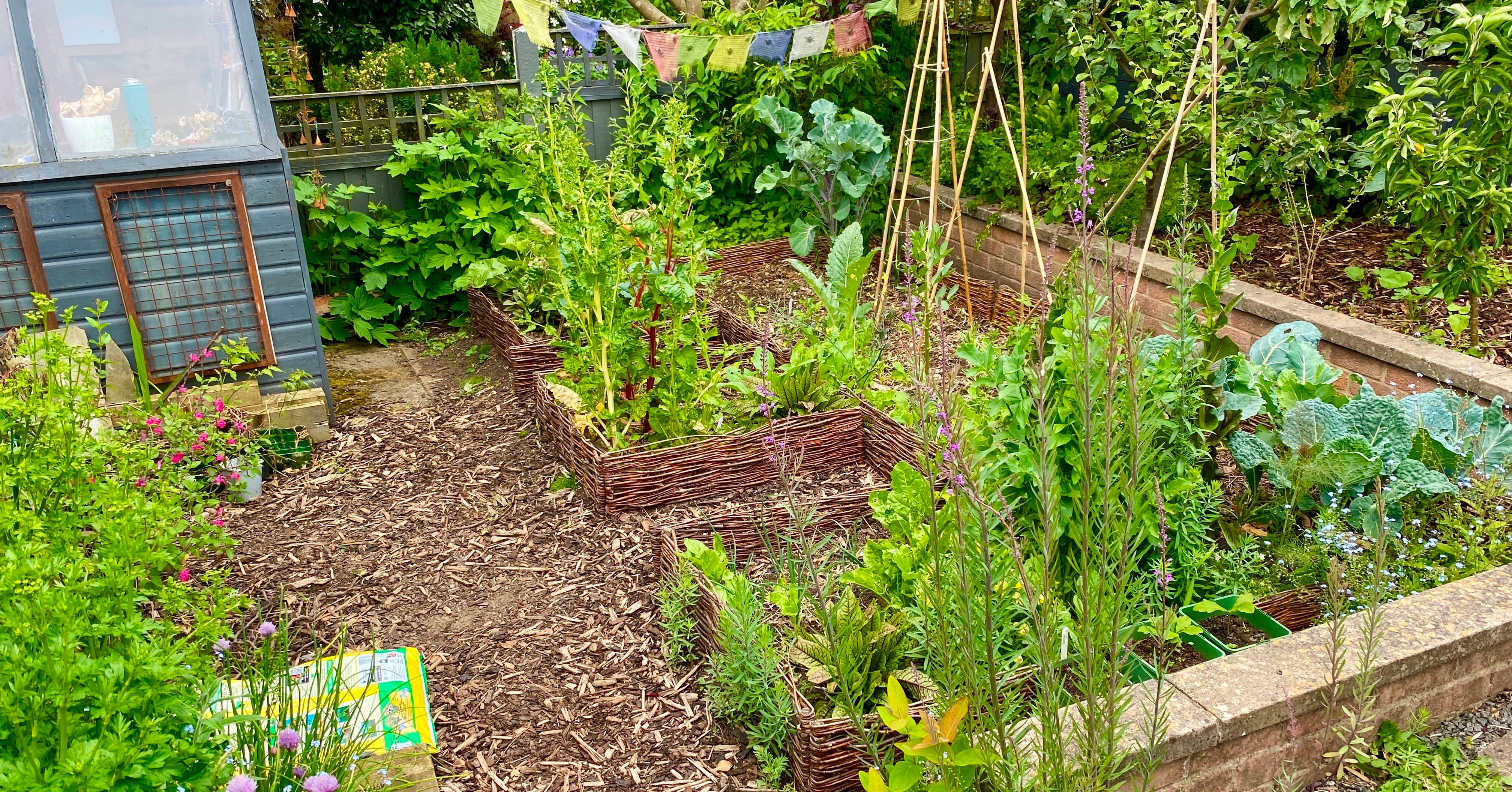
However, it’s not just the perennial crops bedding in that is an issue. Some, like the Taunton Deane kale and red-veined sorrel have established quickly and very robustly. They’re fit for use right now. I’m just letting myself down in terms of harvesting and using them each week.
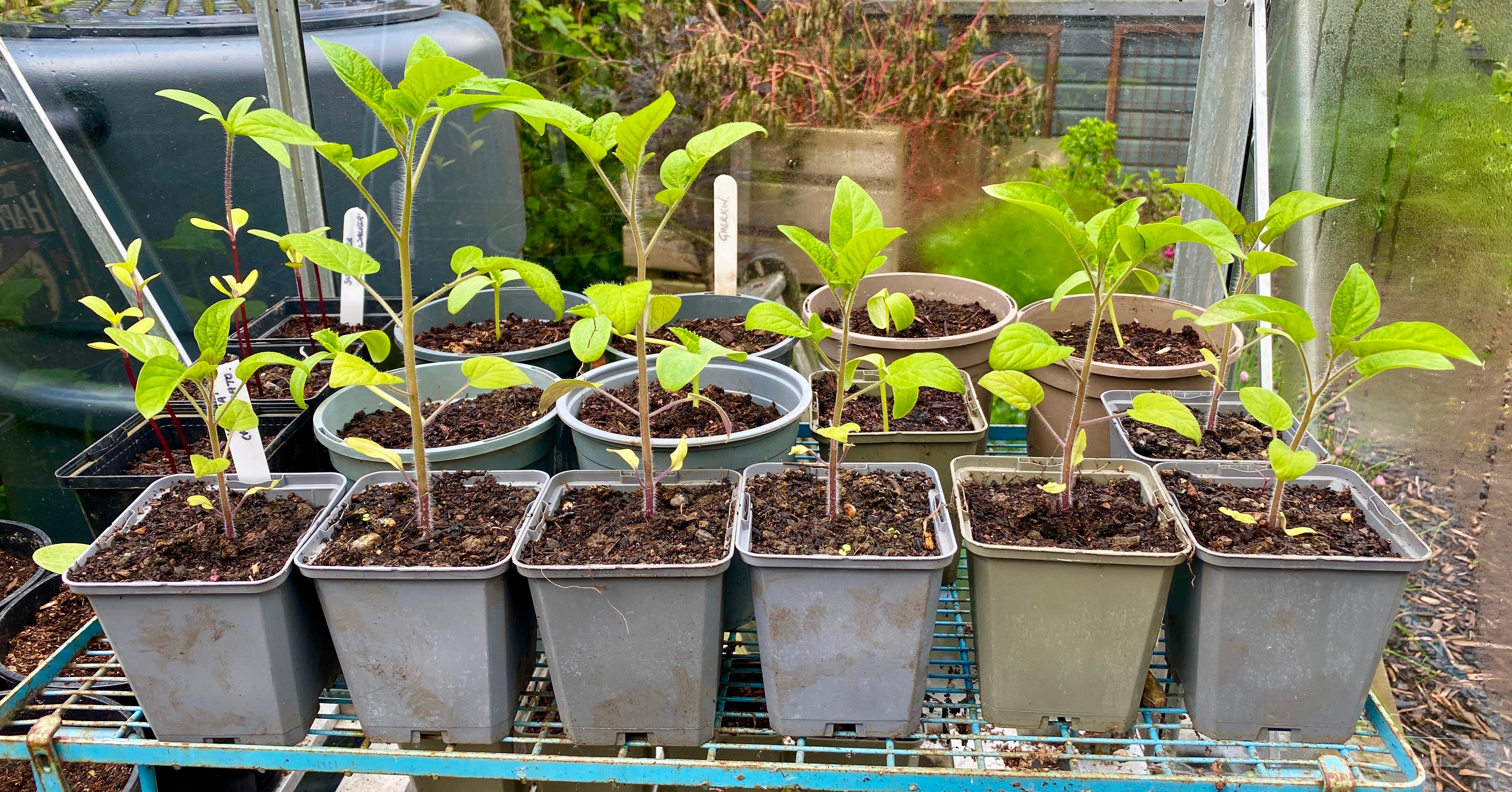
As much as I love to garden and grow plants, I’m inconsistent with it. There are gaps in the beds where seedlings were mown down by marauding slugs or uprooted by defecating felines, and I’ve not got into a rhythm of sowing replacements. Those gaps could have been filled a few weeks ago now, but they sit there still, leaving our household with less options for homemade meals than we could have. Where I have sown other seeds, I’m prone at times to fail to pot them on, so they become weak and leggy and even if I were to plant them out, they’re more susceptible to predation than ever.
I haven’t yet determined an effective way of protecting newly transplanted or germinated seedlings in borders from being decimated either. This is inconsistency and a dash of laziness, not inability or lack of resources.
Knowing my tendencies here, this is partly why I’ve been integrating more perennial vegetables and fruit plants into the garden: one in the ground, they are more resilient and require less maintenance. I just need to make the most of their produce!
Continuing consumerism
Buying food from shops is one way in which my consumerism is living on at a higher level than I intended. It isn’t the only element I’m spending more money on than I would like though. A few weekends ago I purchased a new shirt from a high street retailer - a shirt I don’t need. I was in town with my partner and while he’s very good at browsing and researching and only spending on what he deems necessary and the best option, I’ve always had a weakness for buying whatever takes my fancy straightaway. This time I decided the new shirt was needed for our summer holiday in Somerset.
‘Ecopsychologists have shown that the practice of gratitude puts brakes on hyper-consumption. The relationships nurtured by gift thinking diminish our sense of scarcity and want.’1
In my defence, I will state that I don’t rate my consumerism as dramatic as many people, especially in these days of online apps with next-day delivery. My clothes shopping is few and far between now, and mainly limited to picking things up when needed. I could undoubtedly make the most of the many shirts I already own without buying more however, and really must start making better use of second-hand options like local charity shops and specialist apps such as Vinted.
Non-physical consumption
I find it easy to focus on what I’m buying - or avoiding buying - and overlook the non-physical forms of consumerism that can flare up in my life.
I go through phases of watching TV series and playing video games. I blame this on a 90s childhood where television and games consoles were very much in vogue, before smartphones and social media began taking over our lives. However, these keep me away from the creativity I want to practise, and I am so often struck with ideas which TV and games keep me from realising.
‘In the industrial world we have been trained to be passive consumers and it is time to reclaim our natural right to be active producers.’2
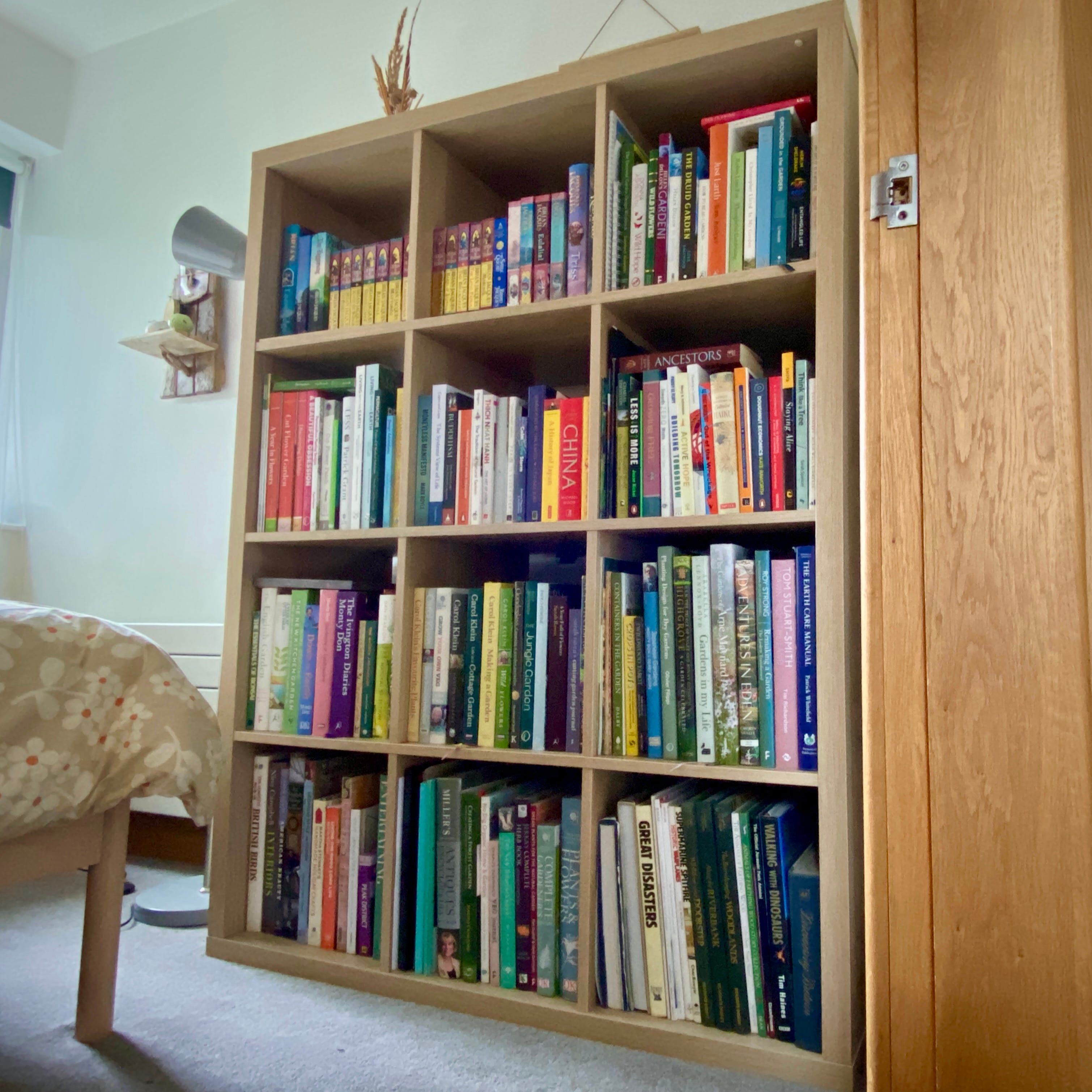
Just as distracting for me are books. I love to read non-fiction. I allow myself some leeway with this, as the knowledge and inspiration I acquire are advantageous and arguably more constructive than mindlessly watching films, series or computer characters running around a screen. I just need to bring in some balance, otherwise it’s far too easy to devote hours to reading without my creative plans coming into being.
Omission of exercise
That time spent consuming rather than creating also impacts another part of my life: exercise. It’s so tempting just to watch TV or sit reading another book when really I ought to be moving.
‘physical inactivity is estimated to contribute to almost 1 in 10 premature deaths from coronary heart disease (CHD) and 1 in 6 deaths in the UK from any cause’3
I love to walk in the countryside. I also got into yoga a few years ago. Somehow, I don’t do either of these consistently anymore.
I have no excuse really. I have the time, now I work part-time. There is an array of marvellous walks directly from our front door and out into the countryside, and it’s only a short drive into different parts of the Peak District National Park. As for yoga, I have a mat and blocks, and love Yoga with Adriene which is freely available on YouTube.
Just like the after-effects of that takeaway, I’m noticing the damage lack of exercise can do in a relatively short space of time. I’ve gone from being pretty active in my late teens and 20s - when I used to walk everywhere and dance in clubs and at parties weekly - to spending most of my time sat at desks or on sofas. My hips are tight, my legs are weaker and my low-to-mid back muscles ache regularly. It’s a trend I can’t afford to let continue.
If I’m to truly live a regenerative lifestyle with all the practical activities that entails, I need to be in peak physical condition for as late into life as possible.


Back to pattern building
My reflections have raised one crucial point on which I need to focus: my inconsistency. I have the ideas, the enthusiasm and the support I need, but a lack of balance throws any consistency out the window easily.
I can be overly attached to patterns and habits, but conversely, the last few months since becoming part-time employed has been a period of persistent pattern disruption. The liberation of having time to do what I felt like spontaneously, as a form of re-discovery and restoration, has lurched perilously towards one excuse after another not to get something done - hence the inconsistency increasing bit-by-bit.
‘‘Pattern disruption also needs to include bringing in new, healthy, regenerative patterns to replace them, otherwise a gap is left that may just be filled with other unhelpful patterns.’4
Time to get back to more constructive pattern building than disruption.
I’ve already set out on the journey to greater consistency, starting with scheduled time slots each week for the most important elements in my life. I have monthly Cultural Emergence design cafés on Wednesday evenings and weekly Permaculture Principles meetings on Mondays. I’ve discovered a local Buddhist group - the Pomegranate Sangha - which meets weekly on Wednesdays. I’ve set aside hours on Monday and Friday mornings for my writing, and certain evenings for catching up on others’ articles here on Substack. I’m meditating every morning as soon as I get out of bed, Thursday to Monday, and practising meditation on Tuesday and Wednesday evenings after the office. I’ve scheduled designing for Thursday afternoons and crafting for Sunday mornings. Time is then left on Monday, Friday and Sunday afternoons as well as all Saturday for walking, yoga and reading.
I’ve not had such a structured weekly schedule since university many moons ago, but am excited to see how my consistency as well as creativity develop with it. I’ve already noticed benefits in the first week.
‘It takes repeated actions to embed our design into the fabric of our personal culture and lives.’5
I recognise it’ll be vital I review and re-structure this pattern when elements change and if some don’t work out effectively. For instance, the Monday evening meetings are only until October. Likewise, I’m hoping to do an online permaculture teacher training course from late September until the end of October, so this will affect what’s already in my diary.
I also appreciate that sometimes it’s ok to take a pause and rest, and enjoy reading, TV or gaming, if this is what my mind and body require. We can’t be constantly on the go, as burnout lies therein. My intention is not to totally eradicate consumption, but to safeguard against it overriding my regenerative practices.
Closely connected to this weekly schedule is optimisation of my workspace. I’ll leave my mobile phone out of my way to reduce distractions from messages, social media and web browsing. I’ve arranged my art and craft supplies into boxes in a kitchen drawer already, so these are quick and easy to grab and move into the extension. I have an A4 notepad and pens for sitting in the garden, away from my MacBook, television and Nintendo Switch, and writing out ideas freely in dedicated, mindful peace. I’ve added a timer app to my MacBook which follows a sort of “Pomodoro” method - 25 minutes typing separated by 5 minute breaks.
My vow
I’m hopeful my more mindful time management will move me away from the “imperfections” I noted above - those deviations from the core beliefs which underpin my regenerative lifestyle vision.
However I do want to highlight that “imperfect” and “perfect” are relative terms, and ultimately, the essential point is that I keep taking one step at a time, ensuring those steps follow the path towards the vision I hold most dear. “Imperfect” is an opportunity to learn and grow, and a sign that I’m at least trying. On the other hand, “perfect'“ is a mirage that is rarely obtainable and often more harmful than helpful.
‘so many of us spend so much time looking for the perfect solution that we pass up what’s right in front of us.’6
The path may be winding and at times it may cross very tough terrain. I know I must respond to fatigue and take rests when necessary, always keeping my regenerative vision in mind.
The path might even become a different path altogether to that I expected, following forks in the road. All hikers know to adapt their practice as required, taking the flatter, easier routes when they have less energy and challenging themselves to the more strenuous routes when at their best. Neither trail is wrong; each has its rewards, so long as its dream and purpose remains the same.
I vow to continue the journey of a more regenerative lifestyle with ever-growing consistency.
Over to you
My biggest challenge in living regeneratively is consistency;
What do you find to be your biggest “imperfection” and how do you manage it?
I look forward to reading your responses and any other feedback in the Comments below.
Other articles you might like


Robin Wall Kimmerer (2024). The Serviceberry. Simon and Schuster, p.12
Macnamara, L. (2020). Cultural Emergence: a toolkit for creating regenerative change. East Meon, UK: Permanent Publications, p.248
England, N. (2024). NHS England» Harnessing the benefits of physical activity. [online] England.nhs.uk. Available at: https://www.england.nhs.uk/ourwork/public-health/harnessing-the-benefits-of-physical-activity/.
Macnamara, L. (2020). Cultural Emergence: a toolkit for creating regenerative change. East Meon, UK: Permanent Publications, p.78
Macnamara, L. (2020), p.156
Holiday, R. (2015). The obstacle is the way: The ancient art of turning adversity to advantage. London: Profile Books, p.101
Pomodoro has really changed my work life. I used to be so distracted by the internet. Now I work with focus for 45 minute periods with 10 mins in between. Kudos to whoever came up with it