
Excessive integration
Can the permaculture bias towards "integrate rather than segregate" sometimes do more harm than good?
A few Mondays ago I attended another of Wilf Richard’s Permaculture Principles sessions. Being smaller in attendance than some online gatherings can be, everyone gets to share their thoughts and questions, and this proves very thought-provoking. In the past it set off discussions and, for me, reflections on indigeneity and sending roots deeper down into the earth I tend.
The session I’m referring back to today was about a chapter Wilf named “Integration Optimised”. It is an exploration of integration within permaculture design, and as with any of the chapters, Wilf does a fantastic job of pointing out that each permaculture principle requires balance. He reminds us they must be tempered by the ethics of Earth Care, People Care and Fair Shares.
While David Holmgren captured this particular principle as “integrate rather than segregate”, we must remember that the web of life doesn’t function in strict duality. There are times when either integration or segregation will be necessary.
Furthermore, depending on each being’s perspective, integration and segregation may be in play. A fellow attendee suggested the example of saplings growing up through brambles, and those brambles acting as a barrier to segregate the saplings from grazing animals, protecting them from being devoured before getting established.
‘The double role of living systems as parts and wholes requires the interplay of two opposite tendencies: an integrative tendency to function as part of a larger whole, and a self-assertive, or self-organizing tendency to preserve individual autonomy.’1
However, I see this as an instance of integration, where those thorny plants are brought into relationship with the saplings. The brambles probably fulfil additional functions, feeding pollinators through their blossom and other animals through their berries, and offering shelter to smaller creatures from larger predators. This isn’t to say that other attendee was wrong - our points-of-view simply varied, and I find that wonderful.
Another fellow attendee that Monday, Tobias, went on to question whether permaculture has now taken integration too far, striving to avoid the negative connotations that hover around the word “segregation”, making that call for balance more intense. He wondered why no one has written more on the inequality of integration and segregation as principles. I find myself taking up such an attempt here, supported by the clearest examples of over-integration and the harmful impacts they can have on our lives if unchecked.
But I want to begin with Tobias’ own example: digital technology.
Technological takeover
Technology can be a wonderful thing. Humanity’s envisioning and creation of tools from resources at our disposal has been one of our great “superpowers”. Being physically weak yet imaginatively strong in comparison to other creatures2, we seized opportunities to make up for our limits. It’s a process that has unfurled over countless generations, and has led us from fire-starting to the speedy MacBook and WiFi on which I now type this article.
Yet humanity was once able to set aside its tools once their work was done and get on with living, whether that’s participating in groups - we’re social creatures, after all - or engaging once again with our imaginations and creativity.
Sadly, that time seems to be disappearing, and it’s our ingenuity that has led to the new epoch: the age of portable smart tech. Are you reading this on a smartphone right now? Maybe while you’re out of your house or office? Or perhaps laid in bed after dark when, for most of humanity’s history, we’d have been asleep with the diurnal rhythms?
Yes, it’s supremely useful to be able to log onto emails, search the Web and complete tasks remotely at the drop of a hat. I appreciate my iPhone 11, mobile data and Google Drive for the fact I can record ideas as soon as inspiration comes, even if I don’t have a notebook and pen (which is rare). I’m grateful I can call loved ones and message friends and acquaintances at all times and places.
I do worry that such massive integration of smart technology into our lives is having a number of negative effects though, which are spiralling into an erosion of what it means to be human.
Many of us no longer experience “downtime”, or “boredom”, or “daydreaming” - however you wish to name it. I believe this is becoming particularly apparent in younger generations who never had to wait at a bus stop without social media, sit on a car journey without streaming platforms or lie in their bedroom without constant internet access. Nevertheless, I witness all ages falling prey to this, forgetting how it used to be and perhaps thinking it an improvement, but missing these key questions: Where has the chance to contemplate and imagine and simply be with ourselves gone? What are the implications for our wellbeing, some which might not yet be fully clear?
One implication that has emerged is our constant sense of comparison. I came on and off Instagram multiple times. I’d join to try to share my gardening, end up gardening for Instagram rather than the other way round, and ultimately fell into negative comparison with others whose gardens and lives appeared much more beautiful, productive or effective than my own. I've had enough of that now, and don’t imagine going back to Instagram again. I do wonder how I’d have coped back in my schooldays however, when I spent so many years bullied, if I couldn’t have come home to peace from that. It must be hell when the bullying, comments and comparison follow you round 24/7. I don’t know how I’d have survived it personally.
Another implication, heightened by the isolation some felt during the COVID-19 pandemic, is that we are restless. We need constant stimulation to be happy, and that stimulation must come from elsewhere, never our imaginations.
Ironically, while we crave external stimulation, that stimulation comes more from content creators via our devices and less from the people and other beings in our lives. How often do we notice those around us are on their phones instead of fully engaged in the conversation or activity at hand? I’m pretty good at leaving my phone lying around while doing other things, but even I scare myself with how often I will pick it up while with others, if only to research something dropped into the discussion. Is it too much to ask to wait until the get-together is over?
And therein lies another issue for me: the ever-readiness of technology nowadays has made us much less patient. We simply must do it now, have it now, experience it now. That might be knowledge, food or clothes. Same day delivery when ordering through online stores heightens this. How many of us honestly like to wait? How many of us can actually handle waiting?
Finally, as mentioned by Tobias on the Permaculture Principles session, sitting down to use this wonderful digital tech for a clear and productive purpose can be so easily stymied by the plethora of alternative uses. We need strong discipline, rigorous structures or additional technological features to keep us on the path we intended when we hit that “Power” button. One of my biggest tech rabbit holes when typing: checking on a word and following the path of its etymology for minutes.
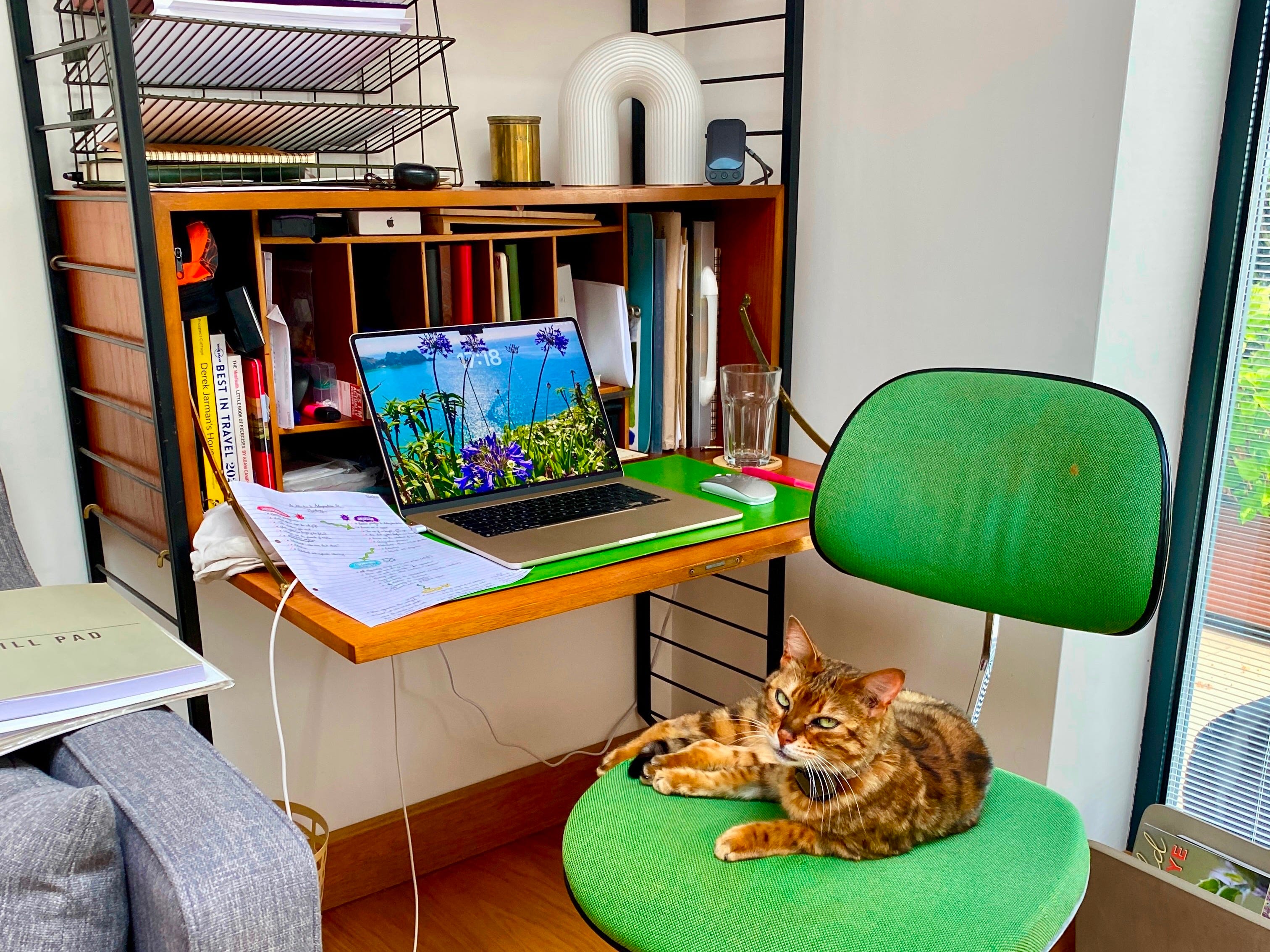
Sorry to sound all doom-and-gloom about digital technology, sat here at my desk surrounded by it all. As I said, there are many positives to it, but what greater prompt to invoke segregation as a practice instead of integration could there be? Generally I leave my mobile phone out of the way during certain activities: writing, walking, gardening, crafting, reading. I have had to segregate tech from my other activities that way, as I know that temptation to just search a term or person or respond to the latest message will draw me off course for longer than I could anticipate.
Globalised processes
While on the topic of digital technology, its staggering, accelerating advancement has produced what I consider another less-than-beneficial embodiment of integration at the expense of segregation: a mass of interwoven globalised processes.
Computers and their constant accessibility have combined with bigger and faster transportation to facilitate pathways that send elements whizzing around our world in the blink of an eye, whether physical or abstract. Many processes have been put in place just because we can, regardless of whether we should:
Food3
Clothing
Fertilisers, pesticides, herbicides
Fuel
Financial transactions, stock markets
Raw materials4
A lot of what the Global North discards as “waste”, including recycling
Labour
Humans! Do we really need multiple overseas holidays each year?
It all feels a lot like the jumble of wires found at the back of desks - perhaps less commonly as we become more wireless. It’s an overly intricate, tough-to-unravel (but not impossible) mess of connectivity. Here we go back to Wilf’s reminder to apply the ethics to our decision-making, however good and possible a principle feels:
‘You can’t exploit another country, the land or other people, unless you are well connected to them. This is an unethical form of integration.’5

Social battery
Over-integration doesn’t just influence the technological, however. I find it pertinent even in terms of the most fundamental of human characteristics: that we are social creatures. While social media and other apps can take us away from physically present humans around us, conversely I struggle with being around those humans for too long.
I do enjoy socialising. It’s a form of integration that brings so many benefits: companionship, shared purpose, grounding, encouragement, broadening of horizons, to name but a few. In the past I was probably too self-isolating at times.
However, at heart I’m an introvert, and I think there will be many of us out there. In light of this, I struggle with prolonged integration within groups, big or small. I manage a few hours well and can be quite exuberant in good company, but my “social battery” definitely has a lower capacity than some. Eventually I hit a wall where very little of what others are saying goes in, and even less comes out of me. The yearning for a quiet, sheltered space to myself kicks in, and I've been known in the past to disappear for a moment, only to end up being gone over half-an-hour. I’m better now at making others aware of my nature, and at excusing myself more fully instead of the vanishing act.
If I were to push on integrating rather than segregating, I’d descend into a fatigued, grumpy and unreasonable persona that in the end does more harm than good for my relationships.
Feathered and four-legged friends
It isn’t just human-to-human relationships that can sour from an excess of integration; the more-than-human can cause its fair share of tricky predicaments when given too much interaction with other elements. It’s common to hear amusing tales of idyllic rural cottage gardens being marmalised by marauding goats or escaped cows - funny for the listener of course, but not such a laugh for the gardener affected.
Then there are the stories of permies who brought chickens into their veg patch, acknowledging their abilities to find and finish off pests and weeds. Unfortunately, though I have no personal experience with them, chickens are not so discriminating and those lovingly tended edibles will meet the same fate as the undesirables. Best to keep the chickens within sensible bounds.
The same really extends to all of our feathered and four-legged friends. Where possible, we’re aiming to segregate them from particular locations - specific nested systems, in other words - , whilst integrating them into the overall system. We might not want to totally exclude hens and ducks who’ll give us eggs or goats who’ll gift us milk from our entire plot, but we do need them to stay away from the polyculture veg patch or fledgling food forest if we’re to obtain a yield ourselves.
Similarly, lovely and essential as blackbirds, badgers and deer - to name just three - are, they will wreak havoc on a productive patch if left to their own devices. We don’t want to take them out of the web of life completely, but we do need to place limits on their movement. Such limits can be time-constrained, such as protecting fruit bushes only while the fruits ripen.
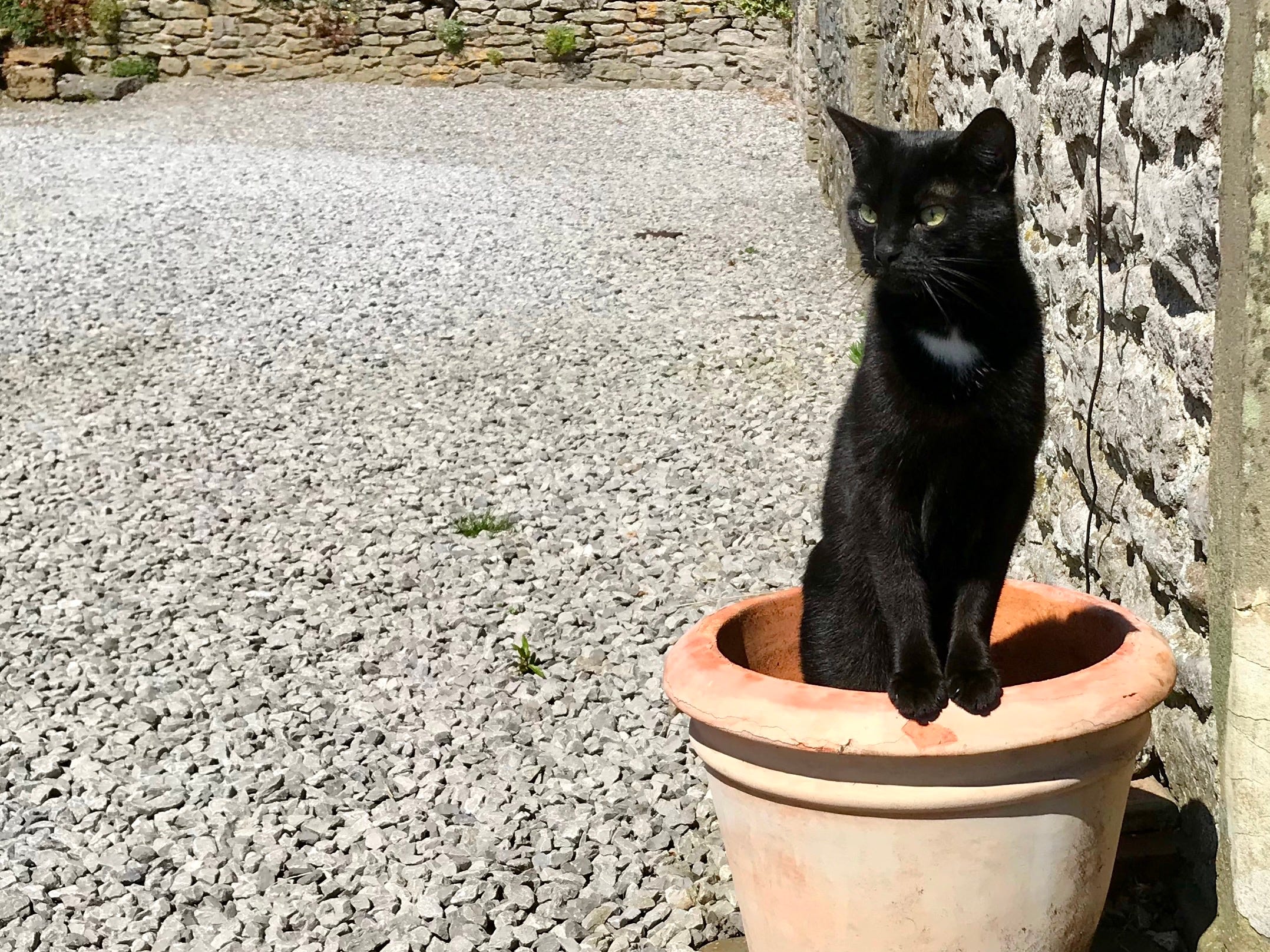
Wandering cats are my challenge right now. I see several passing through our garden, and while I’ll never know which do it, they love to defecate on any bare earth, normally digging up newly planted seedlings in the process of covering their faeces. This is how my latest beetroot plants met their demise…
A balanced diet
I wonder how often we stop to consider whether our dietary habits are too integrated? I hadn't particularly, until putting together this article. I realised then that common precepts like eating “five a day” (of fruit and veg) or splitting our plates into percentages of each “food group” can infiltrate our approach to eating to the extent that we always find room for some tasteless tomatoes, watery cucumber and insipid strawberries…
Now I’m not going to battle the science behind such advice - I’m no nutritionist and don’t always manage a balanced diet each day - but I do feel integrating this too fervently into our lives carries a greater risk. Are we eating organically, locally and seasonally, or are we purchasing produce that has been grown in gigantic greenhouses overseas, pumped full of chemicals, and picked up off the shelf of an exploitative supermarket chain? How much healthier can these ingredients be than not including them at all?
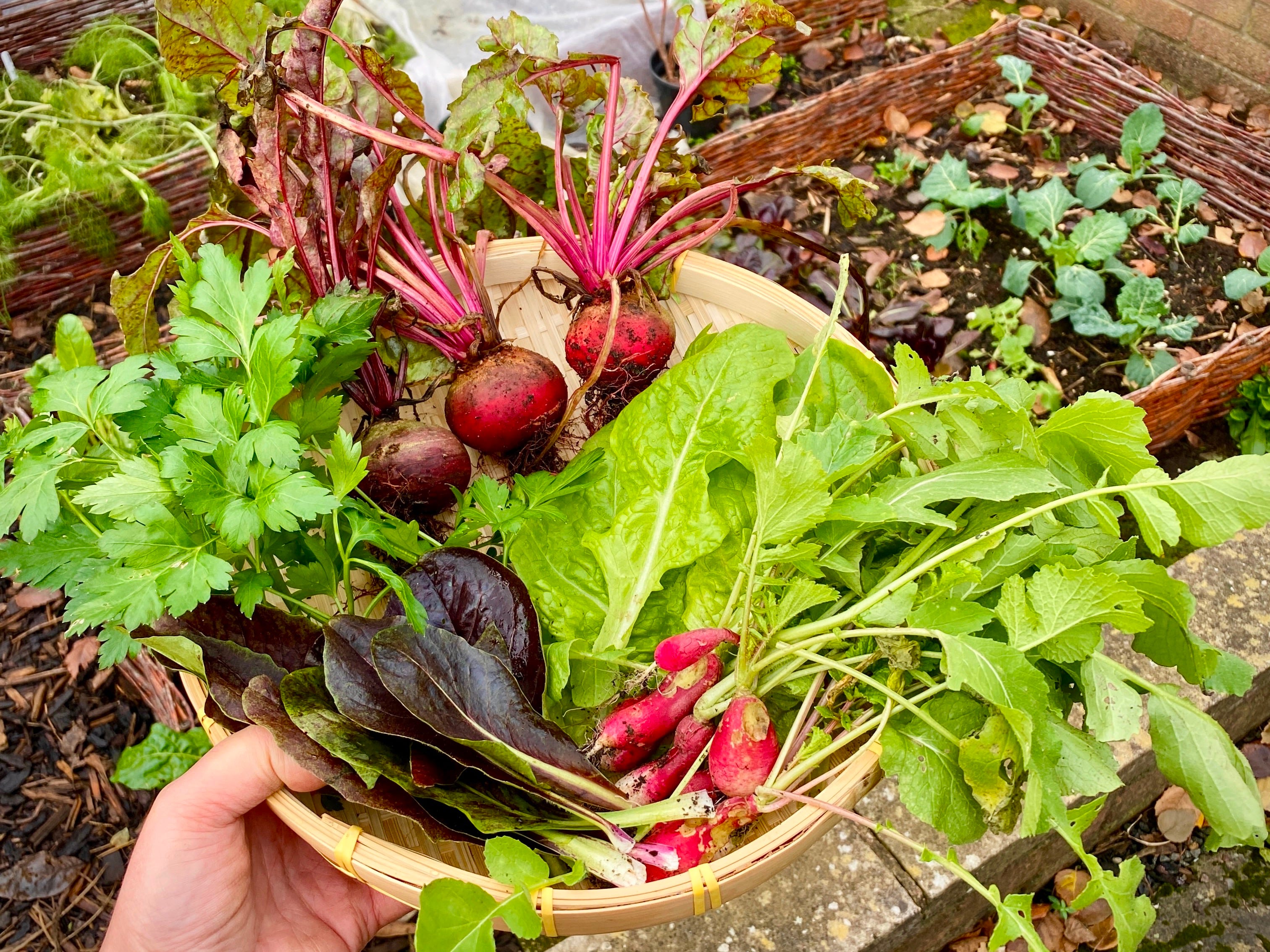
I recognise that sometimes all we can manage or afford is those less expensive vegetables and fruits from a supermarket. However, sometimes I think we need to take the thinking further if we are to live truly regeneratively and healthily. Can we let go of certain extravagances in our spending and non-urgent use of our time, replacing them with visits to local growers or sellers, buying seasonal produce and learning new recipes to use them? It might surprise us to discover how much we enjoy winter root veg, instead of the same year-round selection from the salad aisle.
We can flip things to segregate imported, out-of-season, chemical-laden vegetables while integrating a balanced, nutritional range of produce into our daily dishes.
Rediscovering the threads that bind
In spite of the examples I’ve laid out about, I still feel especially connected to the term “integration” and agree with permaculture’s emphasis on it - as long as it isn’t to the detriment of segregation, making us feel we must avoid setting elements apart at all costs, when it could in fact be more advantageous. The reason I feel such support for “integration” and love Wilf’s naming his chapter “Integration Optimised” is that we are all still deeply enmeshed in a world whose dominant paradigm is to exclude, to divide and to promote competition on so many levels.
It is an outdated story manufactured centuries back by reductionists whose zeal to understand the parts made them forgot how to put them back together again.
The principle of “integrate rather than segregate” doesn’t just advise us to place elements of a design with care and consideration; it invites us to rediscover and reimagine the glimmering threads that bind all life together on our beautiful planet.
‘Integration is such a key goal of any permaculture design. Maybe it is the principle of principles!’6
Over to you
I’m sure there are many more examples of where integration can become detrimentally excessive, but I think I’ve waxed lyrical enough about five of them above. So, I’d like to find out from you:
What examples of excessive and thus potentially harmful integration do you have from your own life?
I look forward to reading your responses and any other feedback in the Comments below.
Other articles you might like


Capra, F. and Pier Luigi Luisi (2014). The Systems View of Life. Cambridge University Press, p.65
As far as we can know, anyway.
I highly recommend Helena Norberg-Hodge’s books and interviews as well as Local Futures as resources for details on the insane unnecessariness of some of our global trade agreements.
Much as I hate that term, depriving natural elements of their inherent worth and identity. Being able to fast-track timber, minerals, etc. around the planet allows companies to churn out new furniture quicker than anyone can enjoy the last batch, never mind vintage and antique.
Richards, W. (2026). The Power of Permaculture Principles. Rizzoli International Publications, p.80
Ibid, p.76
Here's my difficulty with this principle: it objectifies. Integration and segregation are processes by an outside force. We can't integrate ourselves without the others allowing it and segregating ourselves is also hard, albeit easier, as in isolation, but dangerous because we need others. Plants tend to choose ideal conditions and create communities this way. Some (e.g. garlic mustard) even hinder others in order to dominate an area or take action to ensure the next generation is hindered (e.g. parsley). Where plants and animals tend to segregate is in reproduction. They stick to their species, less likely to naturally hybridize - with exceptions, of course. Here again, an outside force is often involved, like humans crossing brussel sprouts and kale to get klettern (and then patenting them). There's always an aftertaste of humans dominating nature for me when it comes to permaculture.